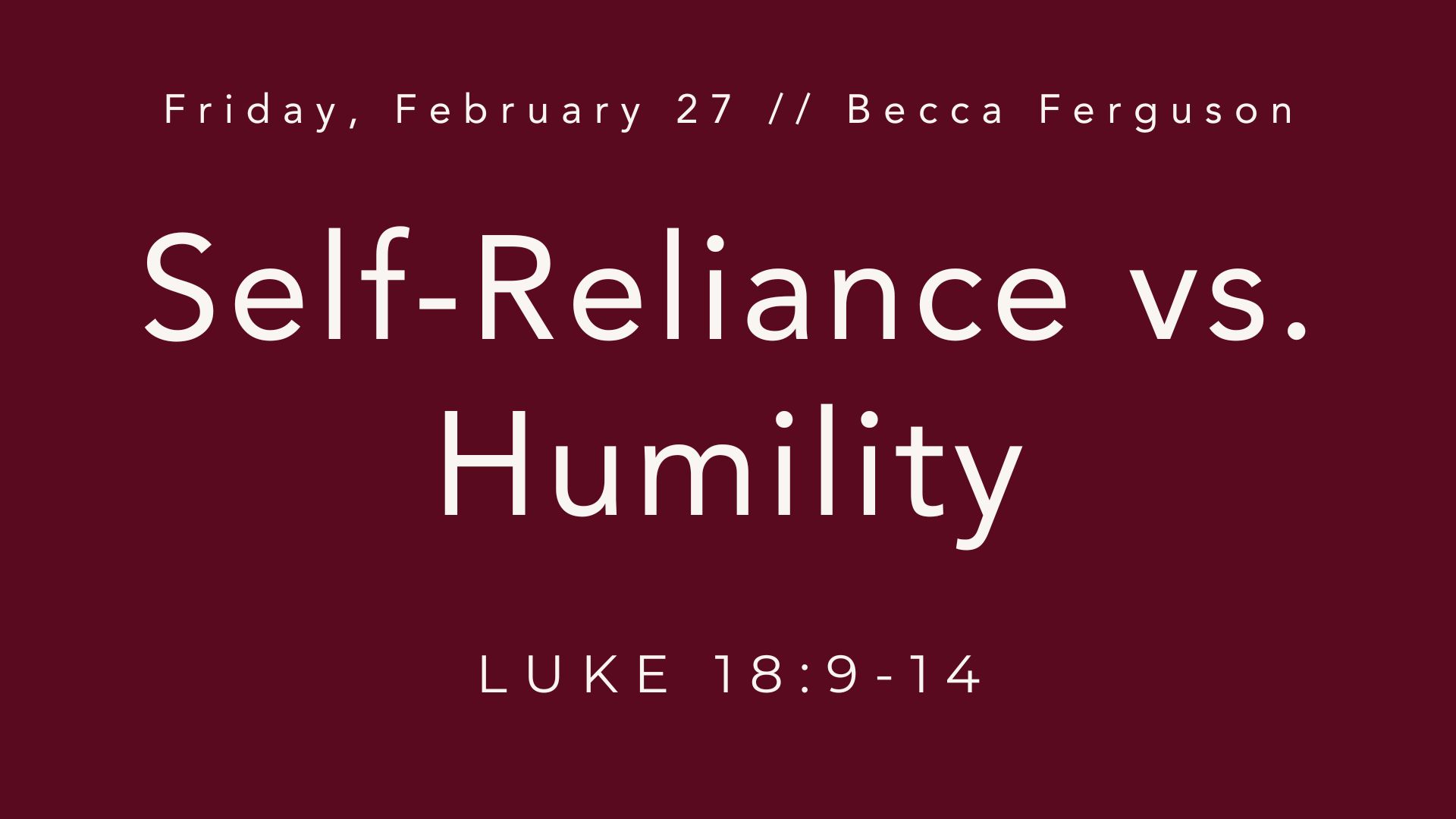
Luke 18:9–14 // Self-reliance vs. humility // Becca Ferguson
In this story, Jesus gives His listeners the opportunity to reflect on two men. One of them has all the appearance of righteousness—he seems to have it all together. The other has all the appearance of sinfulness—he seems like someone who should be ashamed of himself. His job even makes an appearance in the Pharisee’s list of “people I’m glad I’m not like.”
But Jesus makes it clear in this parable that it is not what is on the outside that ultimately reveals someone’s inner posture before God. And it is not what is on the outside that makes someone right before God, either. God is not looking to be impressed by ministry titles, financial ability, power or prestige, or by someone who checks all the right boxes in the eyes of the world. God is looking for something very different.
As Isaiah 66:2b states: “But this is the one to whom I will look: he who is humble and contrite in spirit and trembles at my word.”
God is pleased when we see ourselves clearly, as He does. The tax collector in Jesus’ parable asks God for mercy and identifies himself as a sinner. He sees himself honestly, and he knows he needs mercy and grace that only God can provide.
The Pharisee, on the other hand, cannot see himself clearly because of his pride. He sees himself through the lens of all that he has done for God—and he feels good about it. He tithes. He fasts. He shows up in the right places at the right times. He even has a list ready of people he believes he is better than, and he thanks God that he is not like them. This man has compiled his own qualifications for what it looks like to be right before God—and by his own standards, he’s doing quite well.
And yet, it is the tax collector—the one who comes humbly to God and asks for mercy—whom Jesus says is justified.
God invites us to see everything—God Himself, the world, and even ourselves—as He does. And God tells us that His way of seeing is the true way. When we argue with God, we are ultimately arguing against reality. When we say, “I’m doing a pretty good job,” we leave ourselves unable to see things as they truly are—because we want to remain blind to reality. We would rather pretend to be self-reliant than face the truth that we can never actually be anything other than reliant on the God who made us. And when we do this, we lose the ability to see our need for—and to receive—the mercy and grace God longs to give us.
When we see our sin clearly, when our sin overwhelms us, we are also best able to see the grace and forgiveness of God clearly. When we recognize our need for Him and realize how helpless and hopeless we are without Him, we are finally able to say, “Even this, He forgives! Amazing grace—how sweet the sound—that saves a wretch like me!”
The tax collector, in his humility, understood himself better than the Pharisee did. He saw himself—and his God—more rightly than the religious leader did.
Jesus is making the point that anyone—truly, anyone—can turn to God in repentance. And it is not always, and does not have to be, the person we would most expect.
So in this season of Lent, let us take a moment to reflect on our own hearts. Are we prone to think God wants a list of our accomplishments in order to love and forgive us? Do we build requirements that we know we can fulfill and place them in God’s mouth? Or do we see our sin clearly and still trust that His mercy and grace are greater still?
Question to Consider
Where are you prone to believe that the work you do for God is enough to earn His love or approval? Where might God be inviting you to grow in trusting that what He asks is humble repentance?
Prayer Prompt
Take a moment to pray and ask the Lord to help you see Him, the world He created, and yourself as He does. Ask Him to remind you that before His throne, you do not need to pretend to have it all together. He invites you to come honestly, openly, and humbly—to repent of sin and to receive His gracious gift of forgiveness.