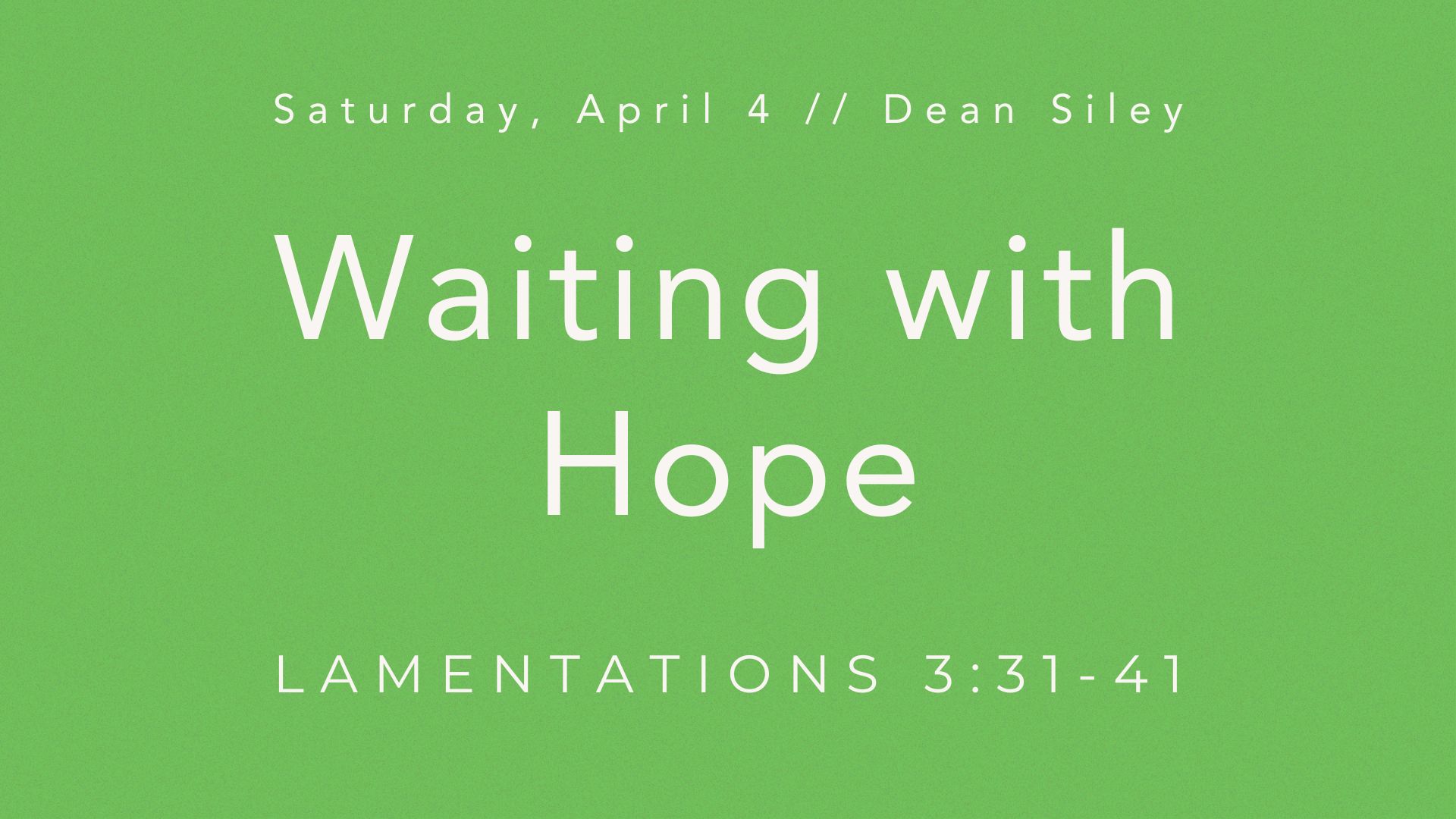
Lamentations 3:31–41 // Waiting with hope // Dean Siley
Lamentations is not a book we rush toward. It speaks from the ruins—from grief that has not been resolved, from suffering that cannot be quickly explained. And yet, in the middle of this long poem of loss, we hear a quiet, steady insistence: “For the Lord will not cast off forever.”
This passage does not deny pain. It does not minimize affliction or hurry toward optimism. Instead, it holds sorrow and hope together, inviting us to remain present in the waiting. Lent often places us in that same tension. We are living between what has been lost and what has not yet been restored.
Waiting is rarely passive. In Scripture, waiting often involves endurance, honesty, and trust formed under pressure. The writer of Lamentations acknowledges that God “causes grief,” and yet also insists that He does not willingly afflict or grieve anyone. This paradox resists easy answers. It asks us to make room for mystery—for the possibility that God’s faithfulness is not always immediately visible, but is still real.
Hope here is not rooted in changed circumstances. It is rooted in God’s character. “Though he cause grief, he will have compassion according to the abundance of his steadfast love.” Waiting with hope does not mean pretending things are fine. It means staying open to God even when the story feels unfinished.
Lent gives us permission to slow down and remain with discomfort rather than rushing to escape it. We often want Jesus to produce clarity or relief quickly. But Scripture suggests that waiting itself can be transformative. It reveals what we reach for when control is stripped away. It exposes where we place our confidence. And it creates space for humility.
The passage turns inward near the end: “Let us test and examine our ways, and return to the Lord.” This is not self-condemnation; it is awareness. Waiting with hope invites reflection rather than reaction. Instead of blaming God, blaming others, or numbing ourselves, we are invited to notice what is happening within our hearts and to bring that honestly before God.
To wait with hope is not to deny grief; it is to refuse despair as the final word. It is to believe that Jesus’ mercy has not been exhausted, even when circumstances suggest otherwise.
As a church, we are learning that transformation often happens in these difficult spaces. Rather than rushing through lament—as we are often tempted to do in suffering—we make room to grieve, to reflect, and to trust that Jesus is present even in pain. Waiting becomes an act of faith—not because we are certain of outcomes, but because we are choosing to remain with Jesus in uncertainty, trusting that He is at work for our good.
Lent reminds us that hope does not require resolution. It requires leaning in and waiting—trusting that Jesus is working in our hearts in ways that are often beneath the surface, often unseen, but always shaped by His steadfast love.
Question to Consider
What is the condition of your heart today? What is your heart grieving? What might it look like to test and examine your ways before the Lord?
Prompt for Prayer
Spend a few moments in stillness before God. You may want to name areas of grief, uncertainty, or weariness without trying to fix them. Ask Jesus for the grace to remain present and open as you wait, trusting His compassion and steadfast love even when the way forward is unclear. Lift up your heart and hands to God in heaven.